|
|
 |
| |
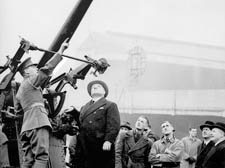 Training at Highbury – not for football but Air Raid Precaution drills behind the Clock End Training at Highbury – not for football but Air Raid Precaution drills behind the Clock End |
Arsenal home at White Hart Lane
ARSENAL owe a debt to Spurs. For all the famous rivalry between the two north London football clubs, it was Tottenham Hotspur who lent the Gunners a helping hand during the Second World War.
Almost straight after the outbreak of war, Highbury, Arsenal's old stadium, was commandeered as a training base for air raid wardens.
With nowhere to go, Arsenal were rescued by the generosity of Spurs, who allowed their White Hart Lane ground to be shared during the conflict.
It was a generous move, as Tottenham had been more than a little peeved by Arsenal's move from south London in 1913, landing on what they saw as their territory. After all, before Gunners moved from Woolwich, Spurs had north London to itself.
Arsenal said thank you by presenting a shield to Tottenham once more serious hostilities had finished.
During the war, some players were posted overseas, while others stayed in the capital as ARP (air raid precautions) Wardens and then competing in wartime at matches where crowds were limited. Strikers like Ted Drake, one of Arsenal’s greatest goal scorers of all time, stood in as goalkeeper as teams became stretched by departing personnel and more important war effort duties. Aldershot, now a non-league team, emerged as one of the best sides back then, largely because an army base was located nearby.
Bernard Joy, a defender at Arsenal who later became a journalist, described wartime football in his book Forward Arsenal as a “curate’s egg, good and bad in patches. Occasionally it was farcical but on the whole it was entertaining enough and that was the sole purpose of its existence in those troubled days”.
Highbury, a deluxe housing development these days, was hit by bombing in 1941. The old North Bank was hit and wrecked by fire. Joy, who doubled as an RAF intelligence officer while playing 200 wartime matches, said witnesses described “the huge iron supports crumbled like wax candles”.
The south stand was also battered by bombs. But, as the stadium was repaired and Arsenal returned home after their stay with Spurs a year after the war finished, people who remember the period often say the Arsenal team was worse affected, and had been knocked off its stride.
Between the wars in the 1930s, Arsenal had dominated English football. When the league resumed without it's “curate’s egg” standard, Arsenal struggled to get back among the front runners.
Not since then have the Gunners, for all their success even under the stewardship of Arsene Wenger, retained a league championship and won two in a row. Players that went on to work in factories and as air raid wardens during the war had achieved something none of the million pound players of today have managed.
RICHARD OSLEY
|

|
|
| |
|
|
|


